

The past few months, I’ve been following the rapid rise of China’s micro-drama industry.
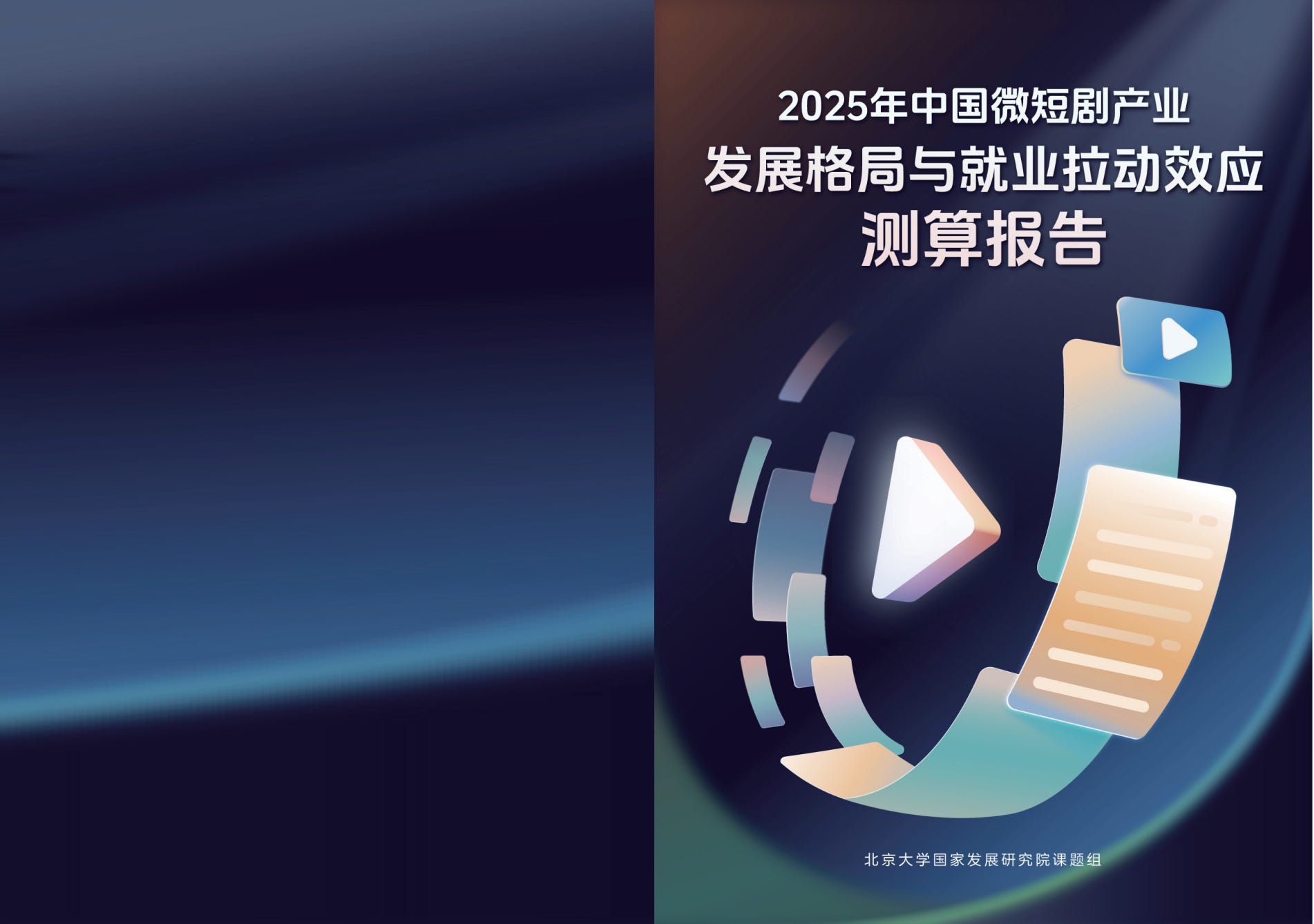
According to a report by China Youth Daily, on Dec. 30, 2025, scholars, government officials and industry practitioners gathered at a symposium on the structure and employment impact of China’s micro-drama sector. At the event, Peking University National School of Development (NSD) released a comprehensive study titled The 2025 Report on the Development Landscape of China’s Micro-Drama Industry and Its Employment Effects.
On Wednesday, NSD’s WeChat account made the full report available for download.
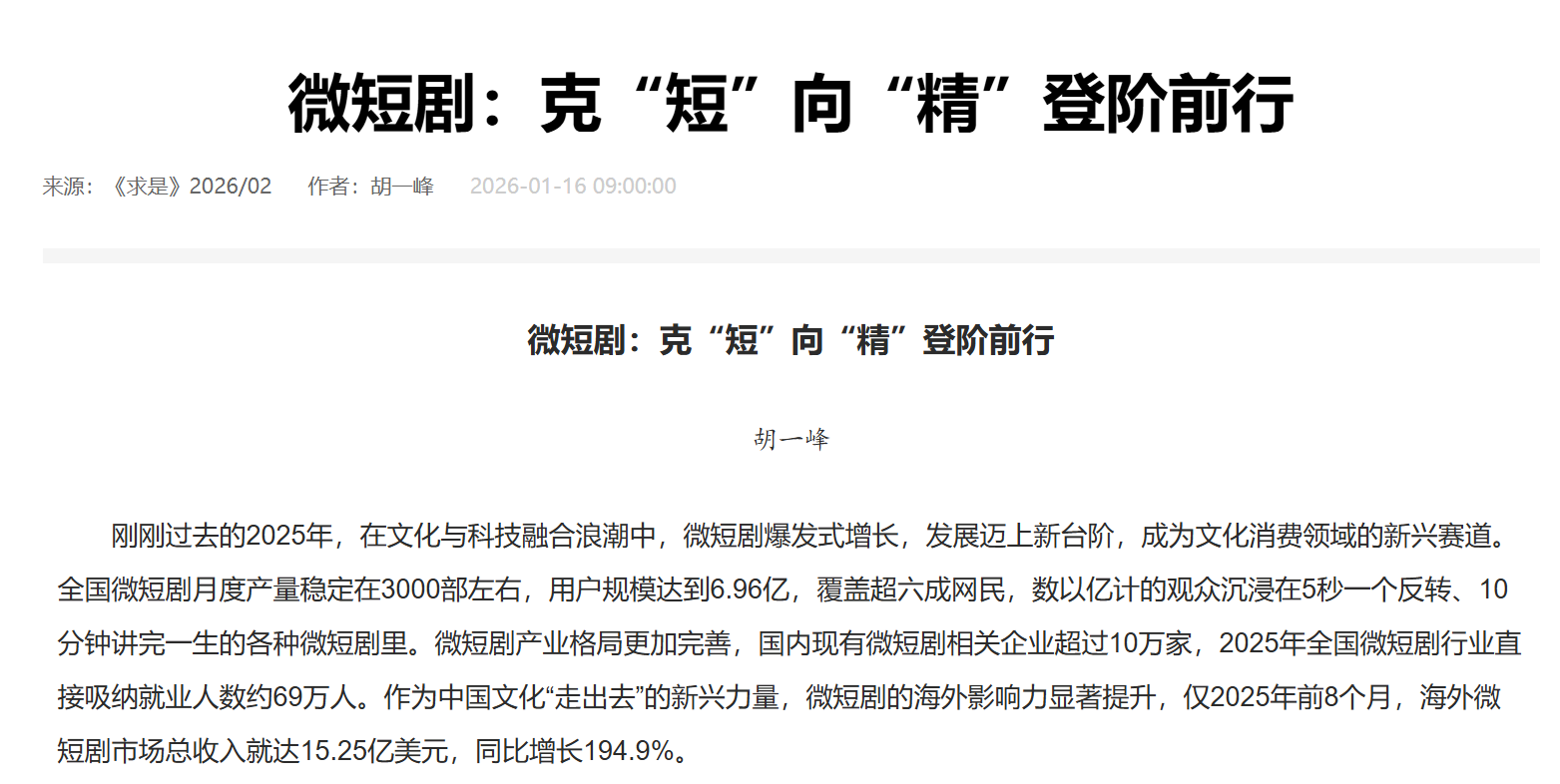
Around the same time, Qiushi, a flagship magazine of the Communist Party of China Central Committee, published a feature article in the second issue of 2026 on the development of the short-drama sector. The piece, written by Hu Yifeng, deputy director of the China Federation of Literary and Art Circles’ theory research office, didn’t directly cite the NSD report, but echoed several of its key data points.
Meanwhile, practitioners across Chinese social media have been sharing their own, ground-level observations about the business.
I don’t personally watch micro-dramas, but I think this industry is worth paying attention to.
Today, I want to walk through what stood out to me in these two pieces, especially how official and academic observers are evaluating the sector, and what the numbers suggest about its growing connection to employment and flexible work.
Before diving in, a brief word about the institution behind the report.
NSD, formerly the China Center for Economic Research (CCER), was founded in the 1990s and has long played a key role in China’s reforms. In 2024, the school marked its 30th anniversary. Its current dean, Huang Yiping, described it as a key driver of China’s systemic economic reforms. Over the years, many scholars affiliated with the school have written candid accounts of how academic research fed into policymaking. One memoir I’d especially recommend is by founding professor Zhang Weiying, for anyone curious about how university think tanks have shaped China’s reform trajectory.
According to NSD, the micro-drama study was led by Professor Zhang Dandan, together with a research team. In estimating the sector’s broader employment impact, they drew on methodologies used by organizations such as Boston Consulting Group and the Creative Industries Policy and Evidence Centre, as well as domestic research on China’s film and cultural industries.
1. The growing influence of micro-dramas in China
The article in Qiushi notes that in 2025, micro-dramas experienced explosive growth, emerging as a new frontier in China’s cultural consumption market.
China’s monthly output of micro-dramas has stabilized at around 3,000 titles, with the user base reaching 696 million — covering more than 60 percent of the country’s internet population. Hundreds of millions of viewers are hooked on these bite-sized shows, where twists come every five seconds and entire lifetimes unfold in just ten minutes.
The NSD report also sketches a profile of who is actually watching micro-dramas. It argues that the highly modular and easily replicable storytelling of micro-dramas, built around fast hooks and constant twists, neatly fills the fragmented downtime of food-delivery riders, commuting office workers, and even older viewers. The emergence of a user base exceeding 700 million, the report notes, reflects not a niche taste but a broad-based pattern of cultural consumption rooted in China’s mass audience.
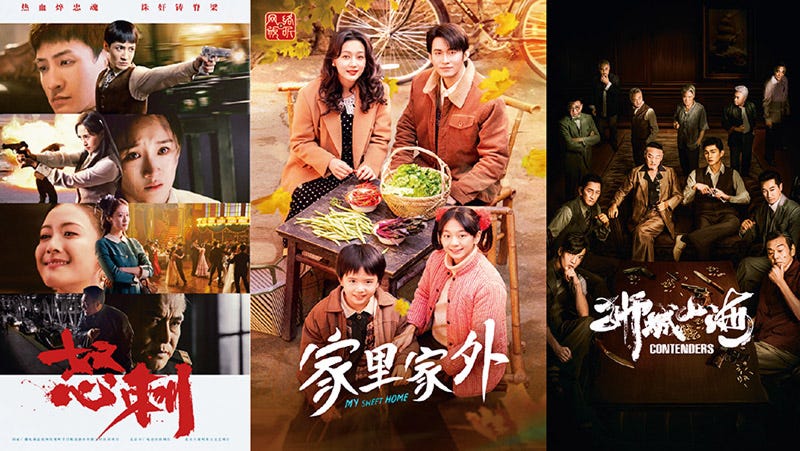
Boosting consumption, of course, is a top priority for policymakers in China right now. From that perspective, the explosive growth of micro-dramas appears to align closely with the country’s broader push to optimize its economic structure and stimulate domestic demand.
2. Micro-dramas’ growing footprint overseas
The Qiushi article argues that micro-dramas have become an emerging force in China’s cultural “going global” push, with their international reach expanding rapidly. It also provides data to illustrate the sector’s rising overseas influence.
In just the first eight months of 2025, China’s overseas micro-drama market generated 1.525 billion U.S. dollars in total revenue, up 194.9 percent year on year.
The NSD report also highlights the industry’s growing international spillover effects:
“The wave of short dramas going overseas has created new professional niches serving foreign markets — including script translation, multilingual dubbing, overseas distribution and operations, and international rights trading. At the same time, foreign directors and actors have begun coming to China to produce English-language or bilingual short dramas, further expanding employment opportunities in cross-cultural production, audiovisual translation, and on-site coordination.”
3. The economic impact of micro-dramas, especially on employment in China
The micro-drama industry’s ecosystem has become more mature, with more than 100,000 companies now operating in the sector nationwide. In 2025, the industry directly employed about 690,000 people across China.
Both Qiushi article and the NSD report mentioned a key figure: the industry directly supports around 690,000 jobs. The NSD report provides a detailed explanation of how that number was calculated:
At present, there is no unified official statistical framework covering employment in either the production or acting segments of the micro-drama industry. Existing industry data tend to focus on market size or viewership, offering little systematic insight into the labor market. Against this backdrop, our research team conducted extensive fieldwork, in-depth interviews, and cross-verification across multiple data sources. Using a structured model built on clearly defined assumptions, we estimated the scale of employment in the short-drama sector. The findings show:
(1) Production crews — including in-house screenwriters, directors, producers, cinematographers, lighting technicians, art directors, costume and props staff, sound engineers, and post-production personnel — form the most stable and technically intensive segment of the industry’s workforce, totaling around 450,000 people.
(2) Lead and supporting actors represent a comparatively smaller but highly professional group, numbering about 32,000.
(3) Extras constitute the largest, most accessible, and most fluid segment of employment. This group most directly reflects the industry’s role in supporting flexible employment and migrant workers, with approximately 207,000 people.
Taken together, these three groups indicate that in 2025 the short-drama industry directly supported around 690,000 jobs nationwide.
Building on this baseline, the report applies an indirect employment multiplier of 1.95, estimating that in 2025 the short-drama sector indirectly supports another 1.34 million jobs across related industries.
It notes that employment multipliers in the broader cultural and film sector typically range between 1.95 and 3.0. Choosing 1.95 therefore represents a deliberately conservative assumption, helping avoid overstating the industry’s spillover effects.
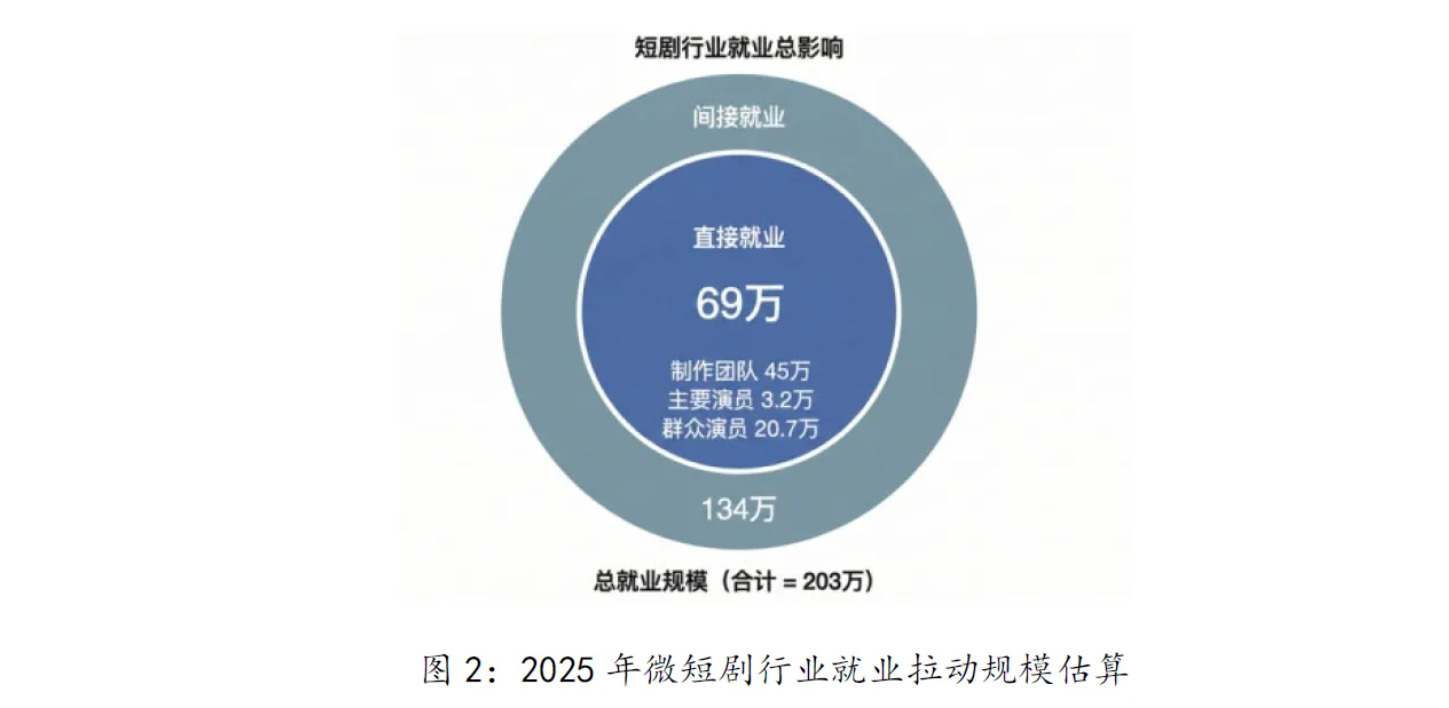
Adding the 690,000 direct jobs to the 1.34 million indirect jobs, the report concludes that micro-dramas could support around 2.03 million jobs in total in 2025.
The study also places these numbers in the context of China’s broader employment pressures. The labor market, it argues, is marked by the coexistence of overall job pressures and structural mismatches. The number of university graduates continues to rise. The class of 2026 alone is expected to reach 12.7 million while key groups such as migrant workers face increasing uncertainty over job stability and job quality amid industrial restructuring and fluctuating demand.
Against this backdrop, an industry capable of generating roughly two million jobs is clearly worth paying attention to — especially given that many of these positions have relatively low entry barriers and offer flexible forms of work.
Qiushi also discusses the reasons behind the rise of micro-dramas and offers its own analysis of the sector’s rapid growth. Since I’m not approaching this from the perspective of an entertainment industry insider, I won’t go into detail here. If you’re curious, you can easily consult the original piece, or even have AI walk you through it.
4. “Growing pains” of a fast-developing industry
The magazine also lays out several of the industry’s current challenges:
As a new cultural format born of the digital age, micro-dramas have achieved rapid growth and impressive results. At the same time, however, the sector still faces shortcomings in areas such as content quality, industry governance, and evaluation systems — the inevitable “growing pains” of a fast-developing industry.
On the quality of micro-dramas, the article argues that the number of truly outstanding micro-dramas remains disproportionately small compared with the sector’s sheer scale. In its words, the situation resembles “vast forests producing only a tiny bit of coal,” a vivid way of saying that high output has yet to translate into high-quality hits.
Some productions are eager to brand themselves around “mainstream values,” yet lack careful script development or convincing performances. The result is often dull storytelling, rough production values, and lukewarm audience responses. Others manage to tap into popular social sentiments but stop at surface-level treatments of trending topics — with repetitive character setups, similar plots, and interchangeable aesthetics, making it hard to deliver anything substantive or memorable. Still others show little commitment to original storytelling, chasing clicks and traffic instead.
In terms of industry governance, the article notes that the workforce is highly fluid. While this mobility injects energy and speeds up iteration, it may also undermine the resilience and institutional stability the sector needs for long-term development. The piece also calls for improving platform algorithms to break out of “aesthetic echo chambers,” and for embracing innovation in response to new technologies such as AI-generated content (AIGC).
Finally, it points out that the evaluation system for micro-dramas — how quality and impact are assessed — remains relatively underdeveloped.
5. Viewing time & short-drama production bases
Beyond the headline numbers, a few other details in the report also caught my attention — particularly how much time people now spend watching micro-dramas, and the emergence of dedicated production hubs in cities like Zhengzhou and Xi’an.
The report notes that from January to August 2025, average daily usage per user rose steadily from 95.7 minutes to 120.5 minutes, and has since remained stable in the 1.5–2 hour range. What’s striking is that viewing time did not fall back after an initial burst of popularity. Instead, it continued to edge upward from an already high base. In other words, micro-dramas are no longer a passing trend — they have become deeply embedded in people’s daily routines, evolving into a highly “sticky,” habitual form of entertainment consumption.
Geographically, production has also begun to cluster. Zhengzhou and Xi’an have emerged as two of the country’s most important short-drama production bases. Industry estimates suggest that each city launches roughly 400–600 new productions per month, together accounting for nearly 30 percent of national output. Meanwhile, Hengdian, with its extensive historical and costume-drama sets, has become the filming location for nearly 90 percent of China’s period micro-dramas.
According to the report, this kind of regional specialization not only reduces homogenized competition but also improves professionalization and production efficiency across the industry.
If I get the chance, I’d love to visit one of these production hubs myself to see how these shows are actually made on the ground.
Have you watched any Chinese micro-dramas? If there’s anything you’re curious about, feel free to leave a comment.
My wife is addicted to these micro-dramas. A number of them are made in China. The stories are repetitive and annoy the heck out of me. When my wife is watching them, I put on headphones and watch YouTube. My wife can't articulate why she loves micro-dramas so much, but she will watch them for long stretches. They charge 19.99 a week for a subscription, and I can see how they would be profit centers for the producers.
A fascinating insight into a fascinating cultural development in China (and for all I know, in the US - I don't spend much time on mainstream social media)
A comment on the overall lack of quality. The same can be said of novels, movies, tv. Most are worthless.