

Good afternoon. Last week, China achieved its first-ever controlled recovery of a carrier rocket’s first stage, and the first time anywhere in the world that such a booster had been recovered using a net.
There have already been several good write-ups of the mission on Substack. So instead of recapping the launch itself, I’d like to look at another dimension of China’s commercial space industry: its rapidly expanding network of commercial launch sites.
The day after the recovery mission, City Evolution (城市进化论), a WeChat publication operated by the National Business Daily, argued that 2026 marks an important turning point for China’s commercial space sector. With reusable rockets entering an intensive phase of flight validation and the country’s national satellite internet constellations accelerating deployment, the industry, it argued, is moving from an experimental stage into a period of rapid growth.
The article also highlighted one increasingly important bottleneck: launch capacity. As more private rocket companies come online, launch pads have become scarce, and securing launch windows is becoming increasingly difficult.
This fits into a broader national strategy. China’s 15th Five-Year Plan (2026–2030) calls for accelerating the development of strategic emerging industries, including aerospace, and for speeding up the construction of an aerospace powerhouse.
Against this backdrop, local governments across the country are racing to position themselves within the commercial space economy, with new launch facilities becoming one of the key areas of competition.
Today, let’s take a look at how China’s commercial launch infrastructure is taking shape.
Most Chinese media now identify three major commercial launch sites currently in operation:
the Hainan commercial spacecraft launch site in south China’s Hainan Province
the Dongfeng commercial space innovation pilot zone in northwest China
the Oriental Spaceport in Haiyang, a coastal city in east China’s Shandong Province
The Hainan commercial spacecraft launch site (Wenchang)
The rocket recovery mission that drew global attention last week took place at the Hainan commercial spacecraft launch site.
According to Oriental Outlook, a magazine affiliated with Xinhua, Wenchang is home to China’s first dedicated commercial space launch site. Its advantages begin with geography.
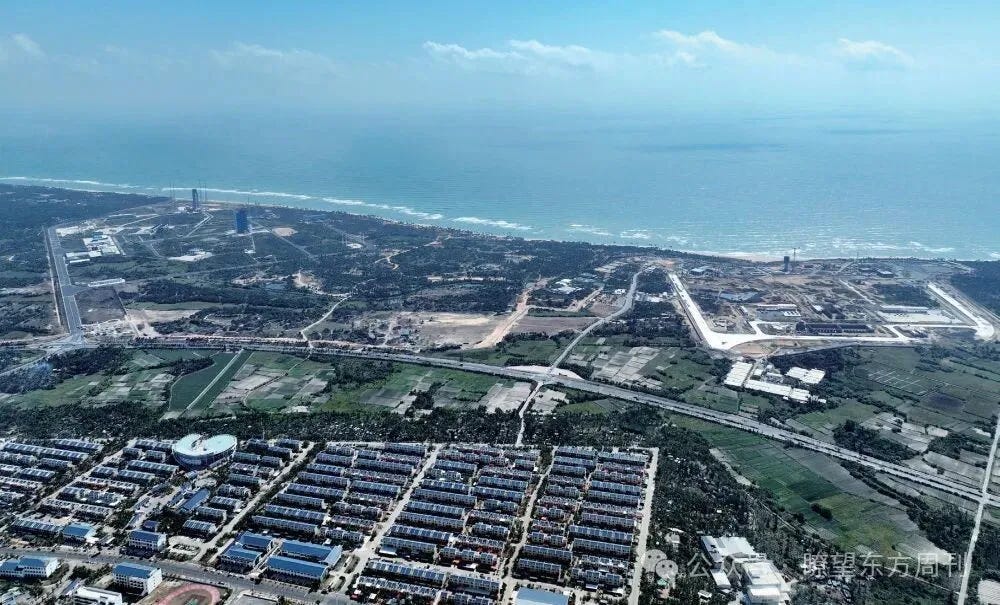
Located at low latitude and relatively close to the equator, Wenchang allows rockets to take greater advantage of the Earth’s rotational speed, reducing fuel consumption while increasing payload capacity. Unlike China’s inland launch centers, rockets launched from Wenchang fly almost entirely over the ocean, significantly reducing risks to populated areas. Its coastal location also makes it much easier to transport large rocket components by sea, an increasingly important advantage as China’s launch vehicles continue to grow in size.
One feature of the launch site that particularly impressed me is its versatility.
Traditionally, Chinese launch pads were designed around individual rocket models — essentially one launch pad for one type of rocket. That approach works for a government-led space program, but becomes inefficient when dozens of commercial rocket companies are developing different launch vehicles.
To address this, Hainan developed what it calls a universal launch pad. Rather than being customized for a single rocket, Launch Pad No. 2 can support rockets from more than ten companies across over twenty different rocket models.
As Yang Tianliang, chairman of the Hainan International Commercial Aerospace Launch Co., Ltd., explained to Oriental Outlook, engineers created a standardized launch interface, while each rocket company develops its own adapter to connect to it.
“Think of it like a universal charging station,” Yang said. “Different phone brands may use different connectors, but with the right adapter, they can all use the same charging point.”
Currently, all rockets with diameters below five meters can use the facility. The result is much higher launch-pad utilization.
This matters because Wenchang’s tropical climate brings frequent rainstorms, thunderstorms and typhoons. The less time a rocket occupies the launch pad, the less likely weather delays become.
To further improve efficiency, Hainan has adopted what’s known in China as the “three-horizontal” launch process: horizontal assembly, horizontal testing and horizontal transportation. Instead of standing vertically throughout preparation, rockets remain horizontal until shortly before launch.
According to Yang, this allows a rocket to arrive lying down, be raised vertically only at the final stage, and reduce its occupancy of the launch area to roughly three days.
By redesigning the entire workflow, the launch site aims to support a much higher launch cadence — an increasingly important capability as more commercial launch providers compete for access.
The Dongfeng commercial space innovation pilot zone in northwest China (Jiuquan)
If Wenchang represents China’s newest commercial launch hub, Jiuquan represents the industry’s roots.
The Jiuquan Satellite Launch Center is China’s oldest comprehensive launch facility. Within it, the Dongfeng commercial space innovation pilot zone serves as a dedicated area supporting commercial launch activities.
Today, many of China’s private rocket companies have built their own launch infrastructure there.
According to Xinhua, rocket developer LandSpace recently completed a static fire test of its reusable carrier rocket Zhuque-3 at the site. Zhuque-3 is a domestically developed, reusable launch vehicle powered by liquid oxygen-methane. It has been developed for large-scale satellite constellation networking missions.
The company said all key ground verification work before the launch has now been completed. In the next phase, the test team will carry out launch preparations as planned, fully preparing for the flight test mission.
The Oriental Spaceport (Haiyang, Shandong)
Haiyang represents a different model altogether. Rather than focusing primarily on land launches, Haiyang’s Oriental Spaceport specializes in sea-based launches.
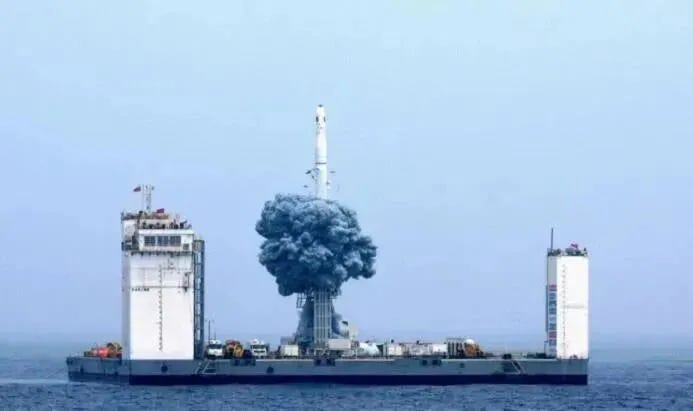
Chen Yao, vice president and secretary-general of the China Regional Economics Association, told City Evolution that Haiyang’s biggest advantage lies in what he described as an integrated “port-behind-factory” model.
Rocket assembly facilities are located only a few kilometers from the launch terminal, allowing rockets to move almost directly from the factory to the launch vessel.
The city has also developed what Chinese media describe as a complete industrial chain covering satellites, rockets and support vessels, while simultaneously building a growing aerospace tourism industry.
According to the aerospace WeChat blog Hello Space (你好太空), China’s first sea launch took place off the coast of Haiyang on June 15, 2019, when a Long March 11 solid-fuel rocket successfully lifted off from an offshore platform.
By 2025, Haiyang had supported more than ten sea-launch missions and helped place over fifty satellites into orbit.
More launch sites are on the way
The expansion doesn’t stop with these three launch centers.
According to City Evolution, Sichuan’s Liangshan, Yangjiang in Guangdong, and Ningbo in Zhejiang are all planning commercial launch facilities as local governments compete for positions within China’s emerging commercial space industry.
Northeastern China is also joining the race. Liaoning Province’s recently released its 15th Five-Year Plan for the marine economy proposes building a commercial offshore launch base.
Chen Yao argues that the three northeastern provinces are already developing complementary roles: Jilin Province has built strengths in satellite manufacturing and applications through projects such as the Jilin-1 satellite constellation. Heilongjiang Province benefits from Harbin Institute of Technology’s aerospace research capabilities, particularly in satellite design and testing.
Liaoning Province, meanwhile, possesses something the other two provinces lack: a coastline. As China’s only coastal province in the northeast, it already has a well-established shipbuilding and offshore engineering industry, providing a natural foundation for developing launch vessels and offshore launch platforms without starting from scratch.
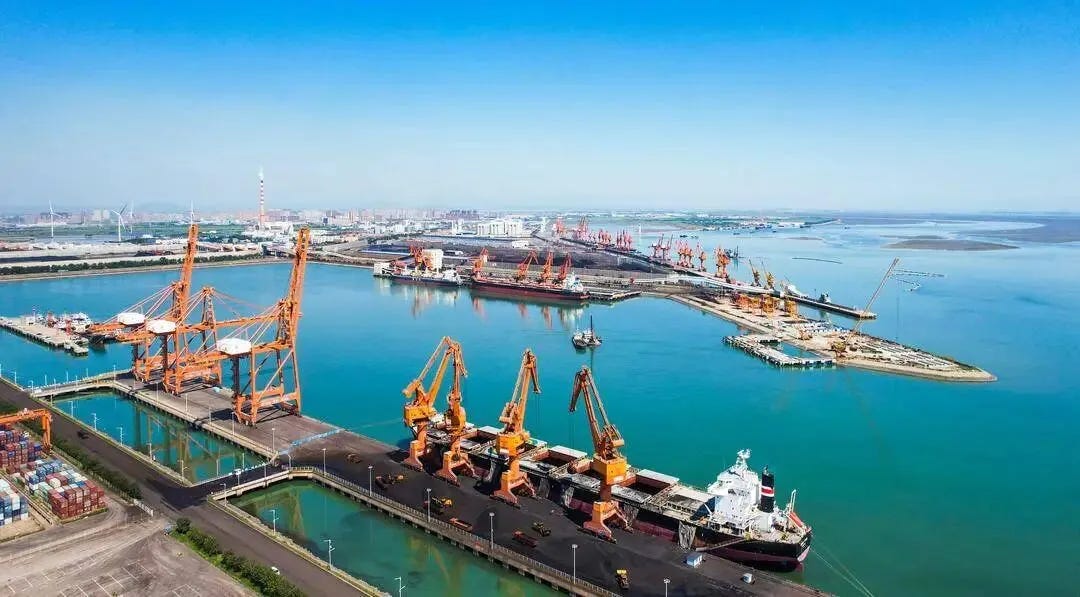
That gives it a comparative advantage in sea-based launch services that its inland neighbors cannot easily replicate.
I’m not an aerospace specialist, so today’s post is intended as a broad overview rather than a technical analysis. If you’d like to dive deeper into any of the topics covered here, I’ve embedded links to the original Chinese-language reporting throughout the article. Feel free to explore the original reporting in greater detail.