

Good evening. Nearly a week has passed since Taiwan’s leader Lai Ching-te delivered his annual October 10 address. Beijing’s official position on the speech was outlined in remarks by a spokesperson for the State Council Taiwan Affairs Office.
Several parts of this year’s speech differed from Lai’s previous addresses. To explore these changes and what they might mean, two Taiwan affairs experts on the Chinese mainland offered their analysis to this newsletter:
Wu Yongping, dean of the Institute of Taiwan Studies and a tenured professor at the School of Public Policy and Management at Tsinghua University.
Liu Kuangyu, a researcher at the Institute of Taiwan Studies under the Chinese Academy of Social Sciences.
How much did China-U.S. relations shape the speech?
Wu Yongping: This year’s speech came against a different background from previous ones. The biggest change is the state of China-U.S. relations.
After two meetings between the Chinese and U.S. presidents this year, bilateral relations have generally stabilized. At a minimum, the two sides have formed a shared understanding that the relationship should be kept stable. This is very different from the previous situation.
If China and the United States agree on stabilizing bilateral relations, many related issues will adjust accordingly. Within the overall U.S. strategic framework toward China, the priority of the Taiwan question has declined. This is the biggest difference between this year and previous years.
After the leaders’ meeting in May, U.S. President Donald Trump told Fox News that he did not want to see Taiwan move towards independence. He also questioned the idea of the United States traveling 9,500 miles to fight a war over the island, adding that he did not want such an outcome.
These remarks reflect Trump’s understanding of the Taiwan question: Taiwan must be subordinate to the broader goal of maintaining stability in China-U.S. relations and should not disrupt that process.
The September meeting helped consolidate the results of the May meeting and the constructive strategic stability between the two sides. On the Taiwan question, continuing along the consensus reached in May already creates significant pressure on Taiwan.
After Trump’s remarks in May, Lai soon indicated that he would avoid actions that could provoke a confrontation. Lai understands that he cannot provoke Trump on the Taiwan issue or challenge Trump’s current strategic arrangement. This is one important reason why the language on cross-Strait relations in the October 10 speech seemed more restrained.
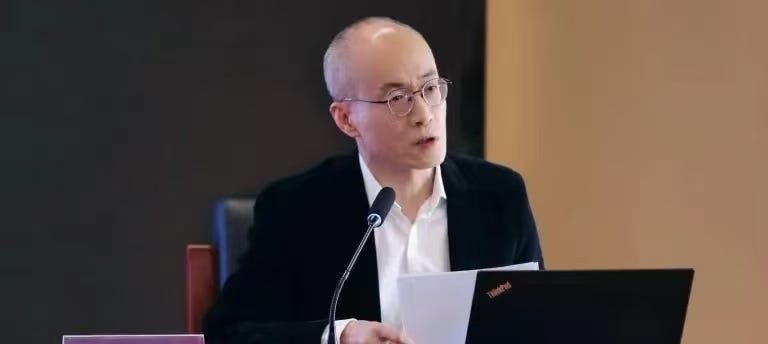
Wu Yongping
How much was the speech aimed at Taiwan’s domestic politics?
Wu Yongping: Another important background factor is Taiwan’s upcoming local elections.
These two factors, China-U.S. relations and the election calendar, shaped the overall tone of the speech. The focus was placed on internal affairs, with a long list of policy achievements. The Democratic Progressive Party (DPP) hopes to use the speech to influence public opinion, highlight its governing record and serve its election needs.
But many of the advantages Lai cited were accumulated over decades. The foundation of Taiwan’s semiconductor industry, including TSMC, was laid long before Lai took office.
Taiwan’s strong economic growth this year is also closely linked to the global AI boom, rather than being mainly the result of the current administration’s policies.
A key issue was largely avoided: Taiwan’s K-shaped economy. High-tech industries are thriving, but many traditional industries are under pressure. AI and semiconductors have lifted growth figures and the stock market, but the benefits have flowed mainly to a limited number of groups connected to high-tech industries.
This is a major underlying concern for Taiwan’s economy. If the AI cycle cools, Taiwan’s growth momentum could weaken quickly.
Why did Lai invoke “a city upon a hill”?
Wu Yongping: The phrase “city upon a hill” was mainly directed at the international community, especially the West and the United States.
The phrase comes from a religious and political tradition familiar to Western audiences. Using this language makes the message easier for them to accept.
Compared with previous speeches, this was a different narrative. Lai used to emphasize Taiwan’s strategic role in the first island chain. This time, that language was not used. He still talked about democratic values, but the expression changed.
The metaphor served two purposes. First, it suggested that Taiwan stands with the West in terms of values and uses a concept familiar to Western audiences to emphasize shared values. Second, it was meant to highlight Taiwan’s importance, perhaps reflecting Lai’s concern that Taiwan could lose support among the democratic partners he hopes to rally.
Liu Kuangyu: The use of religious language may also serve domestic political purposes. It could appeal to Christian voters and church networks in Taiwan, including some within the DPP’s southern support base. This could also be an election-oriented move, aimed at consolidating the base and reaching some middle-ground voters.
Lai has used different symbolic language for different audiences. In previous October 10 speeches, Lai used phrases such as “Republic of China Taiwan” and referred to historical events such as the 1958 artillery bombardment of Kinmen. These references may have been aimed at voters who identify with the Republic of China framework, including centrist voters and some light-blue voters.
This year, the phrase “city upon a hill” may also have been directed at the United States.
The political environment in Washington has changed. Trump’s support base includes evangelical Christians, and the phrase “city upon a hill” comes from a religious-political tradition that resonates with parts of the American right.
Lai may also be mindful of criticism from some U.S. conservatives who see the DPP as too closely associated with progressive politics. Lai now faces a difficult adjustment. The DPP long invested in ties with U.S. Democrats and liberal circles, but it also needs to adapt to the current political climate in Washington.
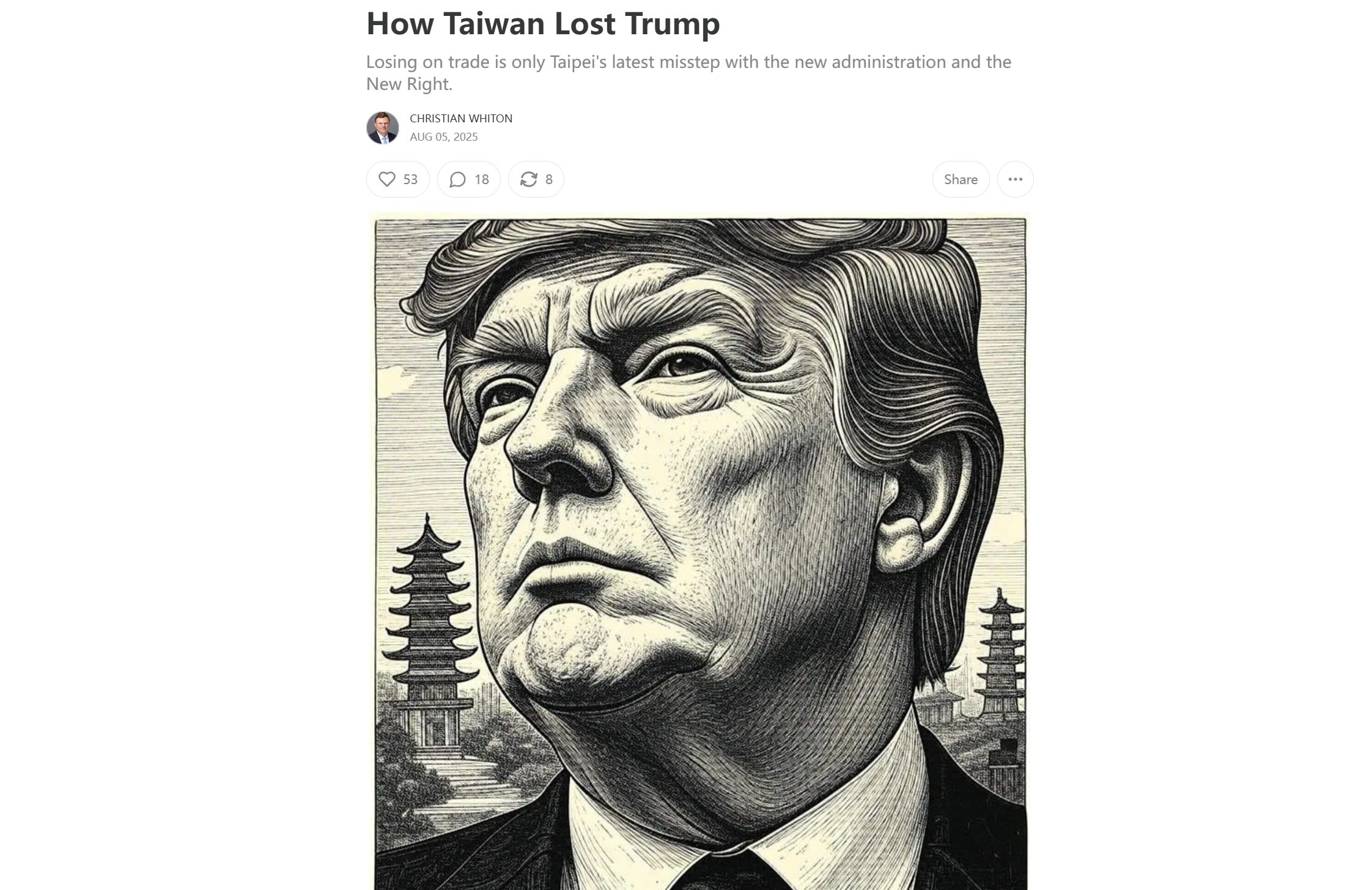
In an August 2025 article, Christian Whiton, a former senior State Department adviser who served during Trump’s first term, criticized Lai’s administration for its close ties to U.S. liberal political circles and its failure to adapt to the rise of the American New Right.
This framing could also complicate Taiwan’s relations with Japan and South Korea.
South Korea and Taiwan have considerable overlap in their industries and compete directly in several sectors. Samsung and TSMC compete fiercely in semiconductors, while companies from South Korea and Taiwan also compete in display panels and shipbuilding. Taiwan’s economic relationships with Japan and South Korea therefore involve both cooperation and competition.
Portraying Taiwan as a “city upon a hill” could, in this view, add another layer of complexity or even create tensions in these relationships.
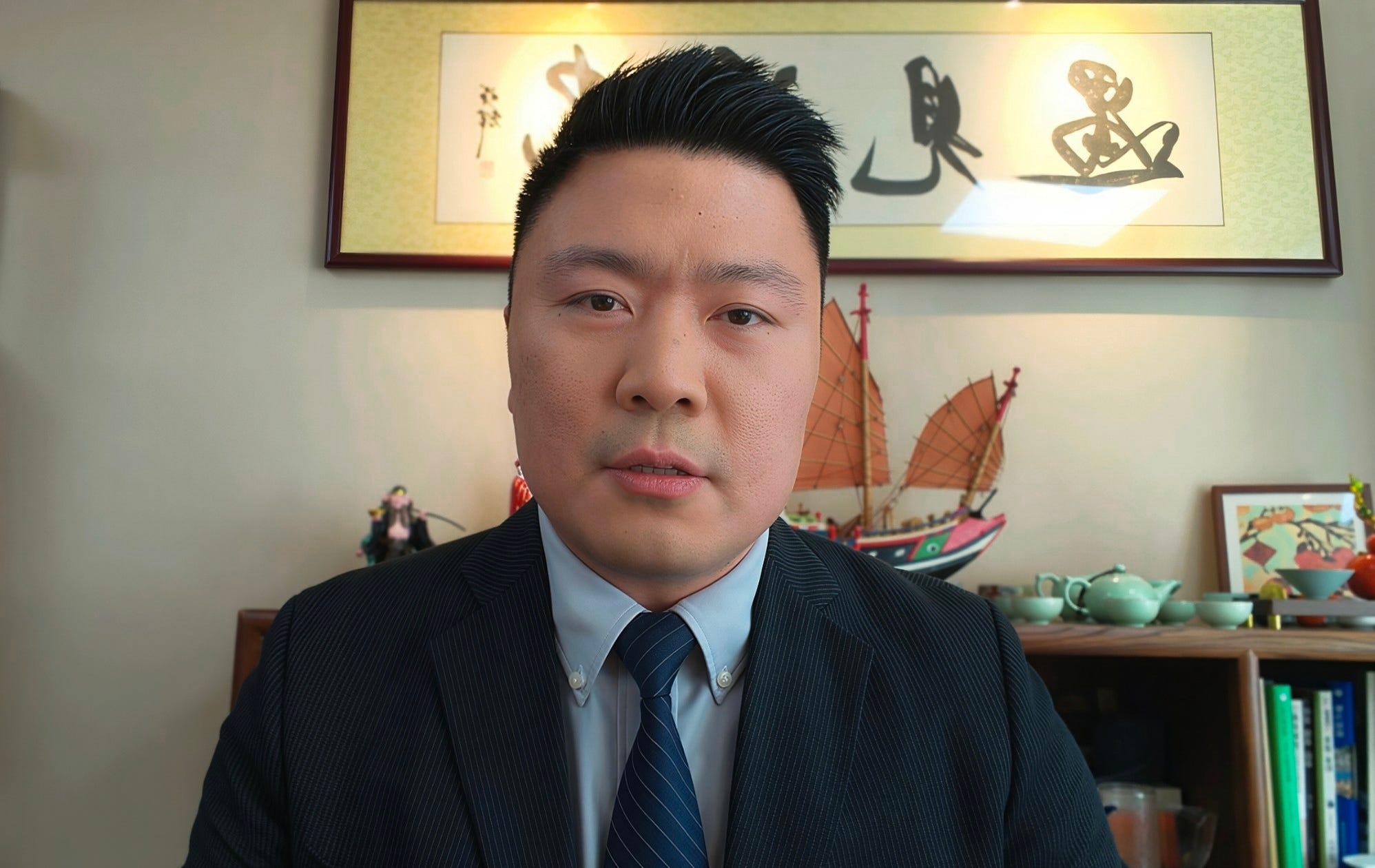
Liu Kuangyu
Has Lai’s overall approach to cross-Strait relations changed?
Wu Yongping: To some observers, Lai’s language in the speech seemed more restrained, but his overall approach to cross-Strait relations has not fundamentally changed. His separatist stance remains unchanged. He has merely softened his rhetoric while continuing to pursue the same agenda.
The security-related parts of the speech also deserve attention. Lai mentioned defense reform, asymmetric capabilities, the development of Taiwan’s defense industry and social resilience. Compared with earlier speeches that emphasized Taiwan’s role in the first island chain, this speech placed more emphasis on Taiwan’s own defense preparedness. This would actually heighten tensions across the Taiwan Strait.
Liu Kuangyu: Lai’s core goal is not to serve U.S. interests. It is to advance his own political agenda and consolidate his position in Taiwan.
This creates risks for the United States. If Washington assumes that Lai’s agenda fully aligns with its own interests, it may underestimate the possibility that Taiwan’s domestic politics could draw the United States into a crisis it does not want.
Overall, the speech appears to reflect a tactical adjustment rather than a strategic shift. The language on cross-Strait relations seems to have been toned down in response to the current state of China-U.S. relations and Taiwan’s election calendar, but the underlying policy direction does not appear to have changed.
Editor’s note: You may not agree with everything the two experts have said, but understanding perspectives from Chinese experts may be one of the reasons you subscribe to this newsletter. Their views should not be taken as representing the official position of the Chinese government.