


On a shelf in a Taipei stationery store sits an orange campaign leaflet featuring a bespectacled man in a suit, with short hair and a broad smile. It is hard to recognize him as Shen Pao-yang, also known as Puma Shen, who was once an unkempt radical with unruly curly hair and fiery rhetoric.
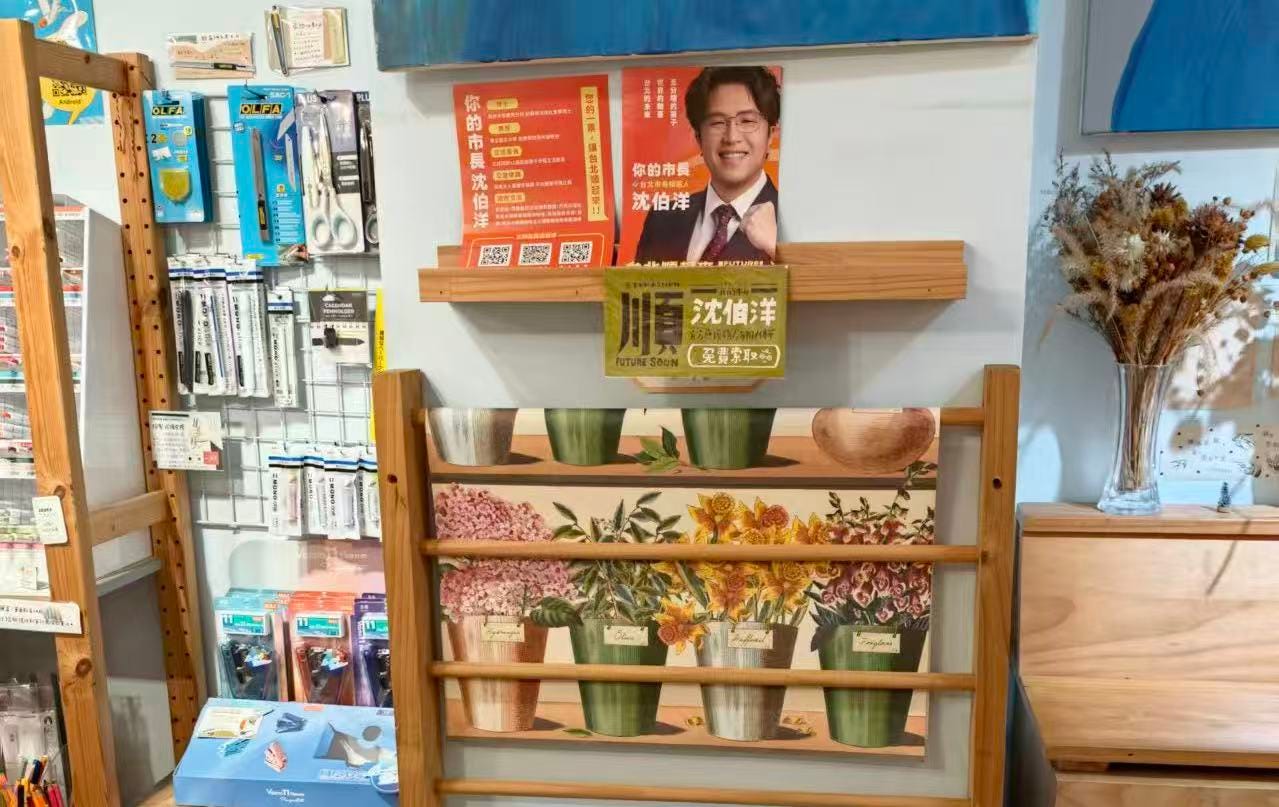
What has prompted this transformation? The answer lies in the Taipei mayoral election, in which Shen, a Democratic Progressive Party (DPP) candidate, has been selected to contest a city long regarded as a stronghold of the Chinese Kuomintang (KMT).
Today, Shen has increasingly highlighted his academic background and his roles as a professor and public-interest lawyer, projecting an approachable demeanor and a polished public image. This marks a striking departure from the confrontational political persona with which he first became widely known.
A DPP legislator and founder of the Kuma Academy, a civil defense organization, Shen built much of his public profile by placing particular emphasis on what he describes as military threats from the Chinese mainland and calling for Taiwan society to prepare for a possible conflict across the Taiwan Strait.
The question, therefore, is not simply why Shen has changed his image, but why such a transformation has become politically necessary.
A RENEWED PROFILE
Notably absent, or at least no longer prominent, in Shen’s campaign profile is his most recognizable political association: the Kuma Academy, which he founded in 2021.
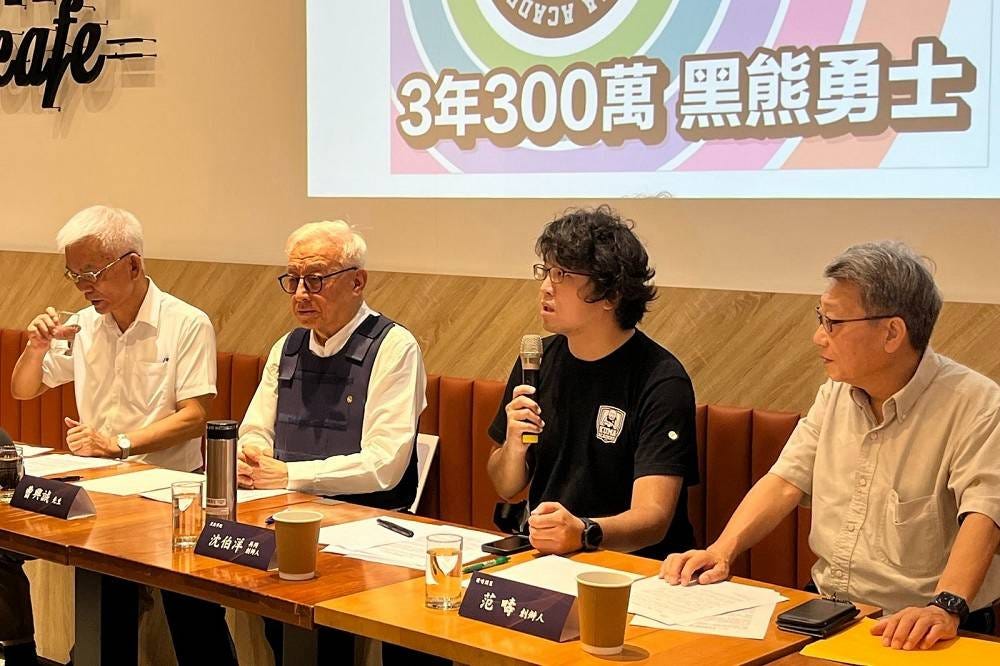
The organization describes its mission as strengthening civilian preparedness and resilience in the face of a potential conflict with the mainland. It has claimed that it aims to train 3 million civilians within three years to help “defend Taiwan.”
Some local critics have accused the organization of turning public anxiety over the prospect of war into a fund-raising opportunity and questioned the prices of the emergency supplies and training courses it offers.
In October 2024, the mainland authorities announced sanctions against the Kuma Academy, accusing it of openly fostering violent “Taiwan independence” secessionists under the guise of training programs and outdoor activities.
Shen’s own political positioning has also come under scrutiny. Despite his advocacy of extensive preparations for a potential conflict, his military service was limited to alternative service rather than regular military service.
As Shen seeks to broaden his electoral appeal, the confrontational image associated with his work at the Kuma Academy could become more of an electoral liability than an asset, even if it helped bring him to public prominence.
Shen’s tough image on cross-Strait issues has moved to the background as he has gradually come to be seen as what campaign planners describe as “the well-behaved grandson Taipei’s grandparents dote on,” Taiwan’s CommonWealth Magazine wrote in an in-depth report.
A SHIFT IN COLORS
The transformation extends beyond Shen’s personal appearance to the visual language of his election campaign.
Rather than adopting the green traditionally associated with the DPP, Shen has chosen orange as his campaign color. Interestingly, Su Chiao-hui, the DPP’s candidate in neighboring New Taipei City, has opted for pink, while the party’s candidates in Tainan and Kaohsiung in southern Taiwan have also embraced shades of pink and magenta.
Green is closely associated with the DPP’s political identity and its longstanding advocacy of “Taiwan independence.” In October 1991, the party amended its platform to include the establishment of a “sovereign, independent Republic of Taiwan” and the drafting of a new constitution. In 1999, it adopted the resolution on Taiwan’s future, claiming that Taiwan is an independent and sovereign state. Since the DPP returned to power in 2016, cross-Strait institutional dialogue has largely broken down while its party platform still retains the goal of “establishing the Republic of Taiwan as a sovereign, independent, and autonomous nation.” Since taking office in 2024, Lai Ching-te has openly rejected the 1992 Consensus, which affirms the one-China principle, and brought out a new version of the “two states“ theory. Throughout, Shen has served as his trusted aide, often leading the charge.
CommonWealth Magazine observed that Shen’s campaign focuses on downplaying the showdown between the green (DPP) and blue, which is the KMT’s traditional campaign color.
By shifting toward orange and pink, DPP candidates appear to be signaling a less ideologically charged and more inclusive image. This strategy may be particularly important in local elections, where voters tend to place greater emphasis on housing, transportation, public services, and economic development.
A CHANGE IN RHETORIC
Perhaps the most striking and ironic aspect of Shen’s transformation is his evolving rhetoric on cross-Strait issues.
In the past, he made remarks about alleged mainland influence over temples in Taiwan, portraying Chinese religious deities as potential instruments of the mainland’s efforts to infiltrate the island. More recently, however, he has been seen visiting temples and participating in traditional religious ceremonies.
He also previously characterized people doing business or having relatives on the mainland as “high-risk groups.” More recently, however, he has distanced himself from his earlier stance.
His attitude toward the Taipei-Shanghai City Forum has also evolved. Having previously dismissed the event as being of little practical value and giving chances to the mainland’s infiltration, Shen has since suggested that it could go ahead without predetermined political conditions or an insistence on the 1992 Consensus. He has even expressed interest in visiting Beijing.
When asked whether he would devote less attention to confrontation with the mainland and other cross-Strait issues during the campaign, Shen argued that it was his political opponents who continued to portray him in that light.
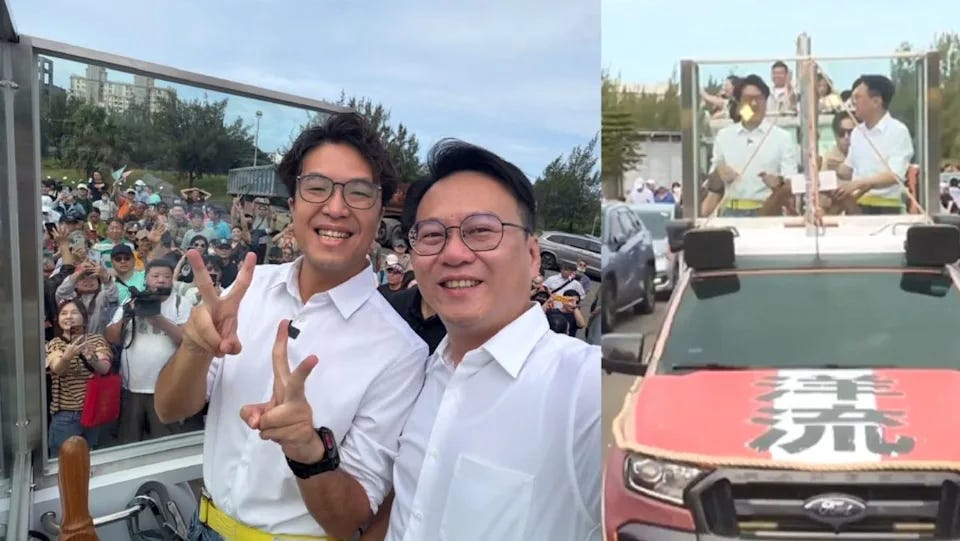
Rather than framing cross-Strait issues solely in terms of confrontation, Shen now appears to be adopting a subtler form of political messaging by presenting himself as a target of political pressure. In late October, during a street campaign in Hsinchu, his vehicle was equipped with bulletproof glass on three sides, which he said was a precaution against alleged repression from the mainland.
WHY THE CHANGES?
The most compelling explanation for Shen’s reinvention may lie less in any personal reassessment of his political convictions than in changing public sentiment on the island.
Lai Ching-te, Taiwan’s regional leader and DPP chairman, took office in 2024 with less than half of the popular vote. Since then, the DPP authorities have faced declining public approval amid dissatisfaction with its handling of economic and livelihood issues and criticism over political actions that have contributed to social divisions, particularly following the failure of a sweeping recall campaign targeting opposition KMT legislators.
The DPP’s political difficulties have been compounded by growing public concern over cross-Strait tensions. According to a poll conducted by Taiwan’s United Daily News in September on cross-Strait relations in 2026, more than half of respondents were dissatisfied with Lai’s handling of relations with the mainland. Meanwhile, 67 percent supported expanding cross-Strait tourism, while 62 percent favored greater people-to-people exchanges.
These figures suggest that many Taiwan voters are placing greater emphasis on peace, development, exchanges and cooperation across the Strait.
Fu Shu-tao, former senior editor of the Taipei-based China Times, argued in an article that Shen’s decision to tone down his confrontational rhetoric on cross-Strait relations reflects his recognition that such messaging has lost some of its electoral appeal. The DPP’s once-effective political playbook for mobilizing voters may no longer be enough to win over the Taipei electorate.
An orange campaign poster and a reassuring smile do not, in themselves, demonstrate a substantive shift in a candidate’s political views. Nor does participation in temple ceremonies necessarily indicate a fundamental reassessment of cross-Strait relations.
While Shen has sought to project a softer public image and spoken of “happiness and hope,” his campaign has also seen heated political exchanges, including criticism directed at opponents and advocates of cross-Strait reconciliation. Many of these disputes have played out on social media, involving accounts supportive of the DPP.
For now, the available evidence points more clearly to a change in electoral strategy than to a fundamental shift in political convictions.
“This is a marketing campaign that was launched with the nomination and will run 198 days. We need to run a campaign that differentiates the brand,” CommonWealth Magazine quoted a source from the DPP side as saying.
Perhaps that is the most revealing aspect of Shen’s reinvention: in today’s Taiwan, even a politician who built his reputation on sounding the alarm over the mainland has apparently concluded that winning over voters requires looking -- and sounding -- considerably less alarmed.


two thirds in favour of improving cross straits relations - good news